When does a remodel need a permit in Lubbock?
What the city exempts, what it doesn't, who has to hold a license, and what to ask before you sign anything.
By Giovanni Home Services, Lubbock, Texas
A remodel in Lubbock needs a permit when it changes the structure of your house or touches the electrical, plumbing, gas, or heating and cooling systems. Finish work, like paint, tile, carpet, cabinets, and countertops, doesn't.
That's the short version, and it settles most kitchen table questions. The long version has a few surprises. A small pergola bolted to your house needs a permit, but a shed out back might not, and a fence can get pretty tall before the city cares.
Below is how the rules read today. They change, and your lot may have its own wrinkles, so before you build, confirm your project with the City of Lubbock Building Safety office at 806-775-2087.
What you can do without a permit
The city code lists work that is exempt from a building permit. Most of it is surface work. If you're changing how a room looks, and not how it's built, wired, or plumbed, you're usually in the clear.
- Painting, wallpaper, tile, and carpet
- Cabinets and countertops
- Minor repairs, like a faucet, a light fixture, a damaged outlet, or a broken window
- Fences that are not over 7 feet high
- One-story detached sheds, playhouses, and similar structures up to 200 square feet
- Retaining walls up to 4 feet, measured from the bottom of the footing, unless they hold back an extra load
- Sidewalks and driveways inside your property lines, unless they sit more than 30 inches high
What does need a permit
The general rule is broad. Building, enlarging, altering, repairing, moving, or tearing down a structure takes a permit before work starts. So does installing or altering electrical, gas, mechanical, or plumbing systems. For indoor remodels, the city gives clear examples.
- Removing a wall
- Replacing windows
- Adding new branch circuits
- Relocating plumbing
- Altering ductwork
- Changing out a water heater or a heating and cooling unit
- Converting a garage to living space
Where kitchens, baths, and backyards cross the line
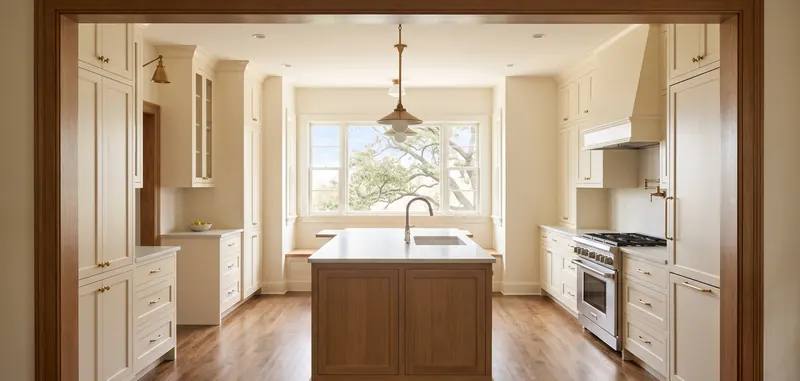
Take a kitchen. New cabinets and counters alone are finish work. Move the sink to an island, add circuits for a bigger range, or take out the wall to the dining room, and now it's a permitted job. Plenty of kitchen remodels and bathroom remodels cross that line somewhere.
Outside, one rule catches people. Any structure attached to your house is treated as an addition, no matter how small. It needs a permit and a plan review, and the city expects a registered contractor unless you're a homestead owner doing the work yourself. The city's page doesn't name patio covers or pergolas, but an attached one fits that wording. Ask a plans examiner to be sure.
Detached is different. A detached accessory building of 200 square feet or less needs no building permit. Go over 200 and the same permit and plan review apply. The code names sheds and playhouses. It doesn't name freestanding pergolas, so ask if yours counts as a similar use.
Decks aren't on the exempt list at all, so treat any deck as a permit question and call. Carports need a permit with a site plan and footing details. Exempt has limits, too. Zoning still applies to that small shed, and if you run power, gas, or water to it, those lines need their own permits.
Who needs a state license and who only registers
Texas has no statewide general contractor license. That surprises people who moved here from other states. Oversight of builders and remodelers is local.
In Lubbock, local means registration. Any building or general contractor working in the city must register. That takes a form, a fee, and proof of general liability insurance or a compliance bond. Registration isn't a skills test. It only tells you the contractor is on file with the city. The trades are another story, because Texas licenses those at the state level.
- Electricians: state license through TDLR
- Heating and cooling contractors: state license through TDLR
- Plumbers: state license through the Texas State Board of Plumbing Examiners
- Irrigators: state license through TCEQ
Which codes apply and how inspections go
The rulebook right now is the 2021 International Residential Code with Lubbock's own amendments, plus the 2020 National Electrical Code. The city also uses the 2021 plumbing, mechanical, fuel gas, and energy codes. You don't have to read them. Your contractor does.
Inspections come in stages. Footings get looked at before concrete is poured, and rough wiring, plumbing, and ductwork before the walls are covered. Then framing, then a final. If someone wants to hang drywall before the inspector has been out, that's a problem.
Plan for the wait. Simple permits can be issued in minutes. Jobs that need plan review take longer, and the time moves with the city's workload. A permit expires after 180 days with no activity or inspection, so a stalled job can lose its permit.
You can pull a permit yourself if the house is your homestead and you live in it. That covers building, plumbing, and mechanical work that you or immediate family do. Electrical is the exception, and that permit has to come from an electrical contractor who holds a state license.
Questions to ask a contractor about permits
You don't need to know the code if you ask good questions and listen to how they get answered. A contractor who does this right answers fast and doesn't get touchy.
- Does this job need a permit, and which ones?
- Are you registered with the City of Lubbock?
- Who pulls the permit, you or me?
- Which trades are on the job, and can I see their state license numbers?
- Is plan review time built into the schedule?
- Who meets the inspector, and will I see the results?
- Do I get copies of the permit and the final inspection at the end?
Two answers should slow you down. One is a contractor asking you to pull a homeowner permit for work his crew will do. That permit is meant for work you or your family do. The other is "we don't need one for this" when walls, wires, or pipes are moving. Make your own call to the city.
What an unpermitted job costs you at resale
Skipping the permit feels like saving time. The bill shows up when you sell. Texas sellers fill out a disclosure form, and it asks about work done without required permits. Buyers hire inspectors, and inspectors notice a new panel, a missing wall, or a patio cover with no record behind it.
From there it costs you in ways that have nothing to do with how good the work is. The buyer may ask for a lower price or walk away. You may end up permitting the job after the fact, which can mean opening finished walls so an inspector can see inside. Good work with no paper trail still looks like a risk to a stranger.
So get the permit question answered in writing, early. At Giovanni Home Services, a project starts with a consultation and a detailed proposal, and that's where this belongs. If you aren't sure where your pergola or patio cover lands, book a consultation or call (806) 853-7158. You can also read how we run a project.
- Finish work like paint, tile, carpet, cabinets, and countertops is exempt from a building permit in Lubbock.
- Structural changes and any new or altered electrical, plumbing, gas, or mechanical work need a permit before the work starts.
- Anything attached to your house is treated as an addition, no matter how small it is.
- Texas licenses electricians, plumbers, and heating and cooling contractors at the state level, while general contractors register with the city.
- Rules change, so confirm your exact project with City of Lubbock Building Safety at 806-775-2087.