Outdoor Kitchens Built for Lubbock Weather
A grill station or a full kitchen, set out of the wind and built to take sun and hard freezes.
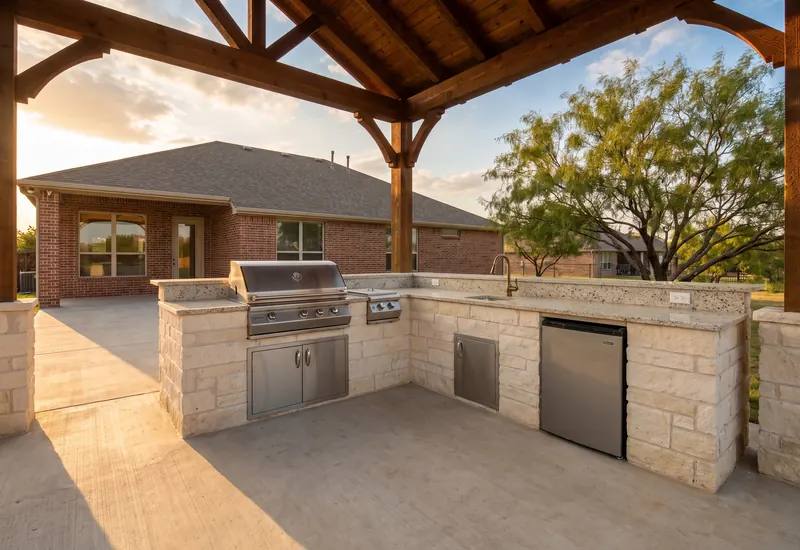
An outdoor kitchen is a permanent cooking space with a built-in grill, counters and often gas, power and water. Giovanni Home Services designs and builds them in Lubbock, rustic to modern. A good one starts with the layout, runs its utilities under trade permits, and uses materials that won't burn or rot.
An outdoor kitchen is a small building project
From the patio, an outdoor kitchen looks simple. You see a grill, a counter, maybe a sink. Underneath there's a footing, a frame, gas pipe and wiring, and all of it has to be right before the stone goes on.
We build the whole range. That might be a basic grill station with some counter, or a full setup with a pizza oven, sink, fridge and storage. It can be rustic stone and timber or clean and modern. Our advice is to build the size you'll cook in every week.
Out here the weather gets a vote. Sun bakes the finish, wind pushes smoke and dust across the counter, and winter freezes any water left in a line. Placement and materials come first here, and the looks follow.
When a grill on wheels stops being enough
Most people call after a few summers of making do.
You carry everything out twice
Every cookout means a dozen trips through the back door with trays, tongs, plates and sauces. Storage, counter space and a small fridge outside keep you out with your guests.
The wind keeps beating your grill
A grill on wheels sits wherever there's room, usually out in the open. A built-in station can be turned and sheltered so the south wind stops stealing your heat.
Your grill cart is rusting through
Thin steel and painted shelves don't last in hard sun and blowing grit. If you're on your second or third cart, a masonry island is less trouble over time.
You prep on a folding table
That gets old fast. A proper counter at working height, beside the heat and not behind it, changes how you cook for a crowd. You can plate food where you stand.
You host more than you used to
Graduations, game days, family in from out of town. When the back yard is where everyone ends up, it makes sense to give the cook a real place to work.
A new patio is already planned
Gas, power and water lines are far easier to run before concrete or pavers go down. If a patio or cover is coming, decide on the kitchen first and build around it.
How an outdoor kitchen gets built
The order matters, because the important work ends up hidden.
Site and layout
The layout starts with how you cook and where the wind comes from, so the grill lands where smoke leaves the seating area. Each appliance manual lists clearances to walls, posts and roof overhead, and those fix the footprint.
Utility locate and rough-in
Texas requires an 811 locate request before anyone trenches. Once lines are marked, gas, electrical and water runs go in under trade permits. Each gas appliance gets its own reachable shutoff, and the piping is pressure tested before it's covered.
Footing and frame
The island sits on a concrete footing or slab, not on loose pavers. The frame is masonry block or steel studs with cement board, so nothing near the fire can burn. Cutouts match the exact sizes in each appliance manual.
Vents, power and protection
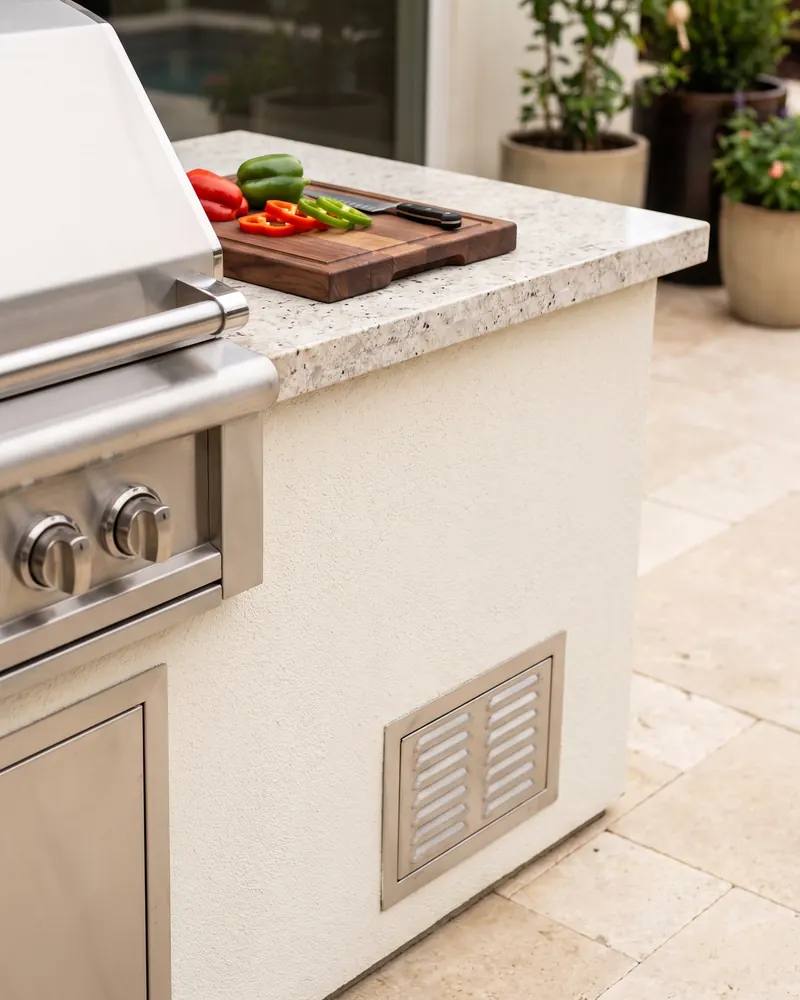
Vent openings go into the island so leaked gas can't collect inside, low for propane and high for natural gas. Outdoor outlets are GFCI protected, with covers that close over a plugged-in cord. Where wood sits near the grill, the grill goes in the maker's insulated jacket.
Finish, counters and startup
Stone, stucco or tile goes on the frame, then the countertops are set and the appliances slide in last. Every connection gets a leak check and every burner gets lit before handover. At the walkthrough, ask to be shown the shutoffs, the covers and the winter routine.
How long an outdoor kitchen takes
Most outdoor kitchens follow roughly this timing. These are typical ranges, and your proposal lays out the real schedule.
- Week 1 to 3Consultation, design and selections. Appliances come first, because every cutout and clearance depends on them.
- Week 3 to 6Permits and ordering. Appliances and stone tops often have lead times, so this is mostly waiting.
- Week 6 to 8Utility locate, trenching, rough-in for gas, power and water, then the footing and island frame.
- Week 8 to 10Stone or stucco veneer, countertop template and install, appliances, leak check and the final walkthrough.
Special-order appliances, a long gas run and spring wind days usually stretch a schedule.
Materials that hold up to sun, grit and freeze
Indoors, a cabinet only has to survive spills. An outdoor one faces full sun, blowing dust, hail in late spring and hard freezes in winter. The frame should be block or steel, with wood boxes kept well away from the heat.
Counters take the worst of it. Dark stone gets too hot to lean on by late afternoon, and lighter granite, porcelain and concrete are easier to live with. Before you choose, set the samples out in your own yard in afternoon sun.
- Block frame vs steel studBlock is heavy and shrugs off heat, but needs a real footing and more time. Steel stud with cement board goes up faster. Both are noncombustible.
- Granite vs porcelain topsGranite is tough and forgiving, but it wants sealing and dark colors run hot. Porcelain won't stain or fade, though an edge can chip.
- Natural gas vs propaneNatural gas means no tanks to swap, but needs a permitted line and enough supply. Propane is simpler to start and costs you a cabinet for the tank.
- Adding a sinkRunning water is handy, and it adds the most plumbing. The line has to be shut off and drained before a hard freeze, or it'll split.
What's in an outdoor kitchen scope, and what isn't
A typical scope covers
- Layout and design around your appliances
- Concrete footing or slab
- Noncombustible frame and vent panels
- Stone, stucco or tile finish
- Countertop template and install
- Gas, electric and plumbing runs to the island
Planned and priced separately
- Gas meter or service upgrades
- Main electrical panel upgrades
- Furniture, cookware and propane tanks
- Yearly sealing and winter shutdown
Your written proposal spells out exactly what's included and what's left to you or the utility.
What Lubbock weather does to an outdoor kitchen
Put the cook's back to the south wind, and the whole patio gets more comfortable.
Prevailing wind here comes from the south and averages about 12.4 mph, and March and April are the roughest months. A kitchen on the sheltered side of the house holds heat and keeps grit off the food.
Permits follow the utilities. In Lubbock, gas, electrical and plumbing work needs trade permits even when the structure is exempt. A patio cover attached to the house counts as an addition and needs its own permit.
Common questions about outdoor Kitchens
Do I need a permit for an outdoor kitchen in Lubbock?
Usually yes, for the utilities. The City of Lubbock requires trade permits for new gas, electrical and plumbing lines, even when the island itself wouldn't need a building permit. Only portable appliances are exempt on the gas side. A roof attached to the house needs a permit too. Sort out the permit path early, while the kitchen is still on paper.
Can a kitchen go under my existing patio cover?
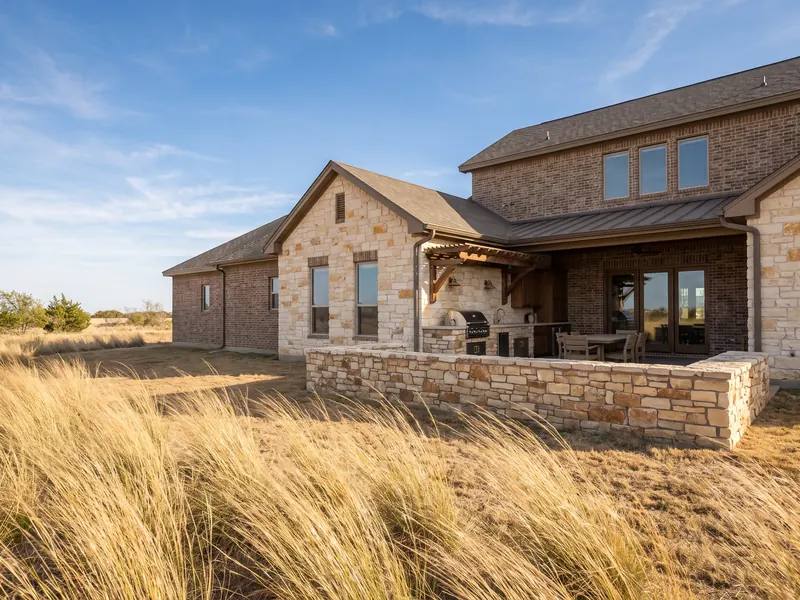
Often, but the grill decides. Every built-in grill has a rating plate and a manual that list how far it must sit from walls, posts and anything overhead that can burn. Those numbers have to clear your cover before anything gets drawn. Sometimes the grill moves to the open edge and prep stays in the shade. That split works well.
Where should the kitchen go in my yard?
Close enough to the back door that you'll use it, and out of the wind's main path. In Lubbock that usually means using the house or a wall to block the south. It also matters where smoke will drift, where the afternoon sun lands, and how far gas and water have to travel. Short utility runs keep the project simpler.
What happens to the sink in winter?
It gets shut off and drained. Lubbock sees hard freezes, and water left in an outdoor line will split the pipe or the faucet. The plan should include a shutoff you can reach and a way to drain the line, and you should see it done once before the kitchen is yours. If that sounds like a chore, a kitchen without a sink is a fair choice.
What should I decide before the first meeting?
Mostly how you cook. Do you grill twice a week or smoke brisket all day? Do you want pizza, a griddle, a fridge, a sink? Make a rough list and note any appliances you own. We bring the questions about gas, power, wind and layout, and after that we write you a detailed proposal. Call (806) 853-7158 or Book a Consultation to start.
Ready to cook outside?
Call us or book a consultation. We'll walk the yard with you and write up a clear proposal.