Patios and Fire Features in Lubbock, TX
Patios, fire pits, fireplaces and pool surrounds, planned from the base and the drainage up.
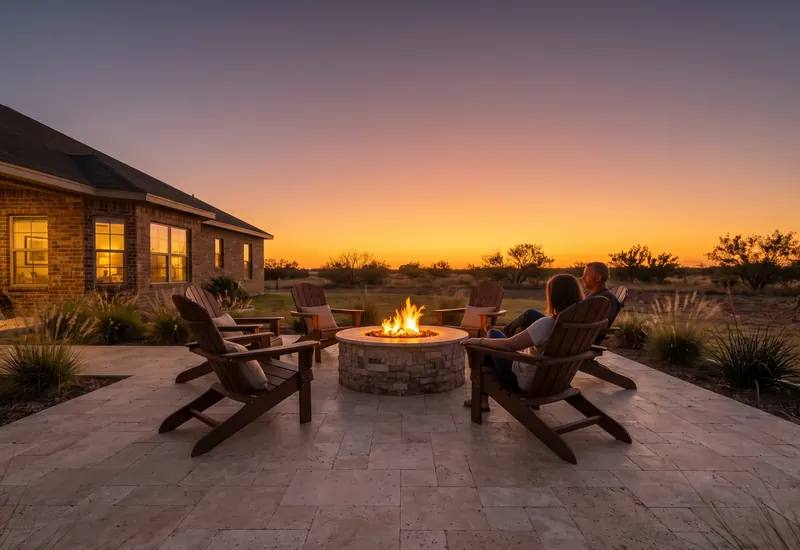
A patio is a level outdoor floor of concrete, pavers or stone. A fire feature is a built-in pit or fireplace burning wood or gas. Giovanni Home Services builds both in Lubbock, plus pool surrounds. What decides how long one lasts is the base, the slope and the drainage.
A patio is only as good as the ground under it
Every patio problem you've seen started below the surface. A crack wandering across the slab, pavers that dip under the chairs and a puddle by the back door all point to the base or the slope.
A patio job starts out looking like nothing but digging. Soft soil comes out, the ground left behind gets compacted, and crushed rock goes down in layers, with the slope set so water runs toward the yard.
Fire features and pool surrounds start the same way. The questions are where the water goes, where the heat goes, and what the surface will feel like on bare feet in August. Get those answered before any stone is ordered.
Six reasons people rebuild a patio
A few are about looks, but most come down to water and movement.
Water pools against the house
A slab should shed water away from the foundation. If it runs toward your door or sits in a low spot, the slope is wrong and patching won't fix it.
Cracks keep getting wider
Hairline cracks are normal in concrete. Wide ones, or sections sitting at different heights, mean the base has settled. That's a trip hazard, and a clue about what's underneath.
The builder slab is too small
Many homes come with a patio sized for a grill and two chairs. Add a table and there's nowhere to walk. A proper extension gives the yard a center.
Pavers are rocking or spreading
Pavers that shift or spread at the edges were laid on too little base or with no edge restraint. They can often be lifted, the base rebuilt, and the pavers relaid.
You're tired of chasing smoke
A portable pit on a windy evening sends smoke and sparks wherever it likes. A built-in feature, placed and sized on purpose, gives you the fire without the constant chair shuffle.
The pool deck burns or slips
Dark, smooth surfaces around water scorch feet and turn slick when wet. Lighter colors and textured finishes solve both at once, and good drainage keeps splash water from standing around.
How a patio gets built, layer by layer
Concrete and pavers share the first three steps and part ways at the surface.
Layout and drainage plan
The job opens with an 811 utility locate, then stakes and string lines mark the shape. Where the water will go gets decided before any digging. The surface has to fall away from the house, toward a lawn, a planting bed or a drain.
Excavate and compact
Topsoil and soft spots come out down to firm subgrade, and that ground is compacted. Crushed aggregate goes down in thin layers, each one compacted before the next. For a paver patio, the paver industry's guide calls for at least 4 inches of base.
Run gas and sleeves
If there's a gas fire feature, the line goes in now under a gas permit, with a reachable shutoff. Empty sleeves buried under the patio let wiring or a water line cross later without cutting it.
Set the surface
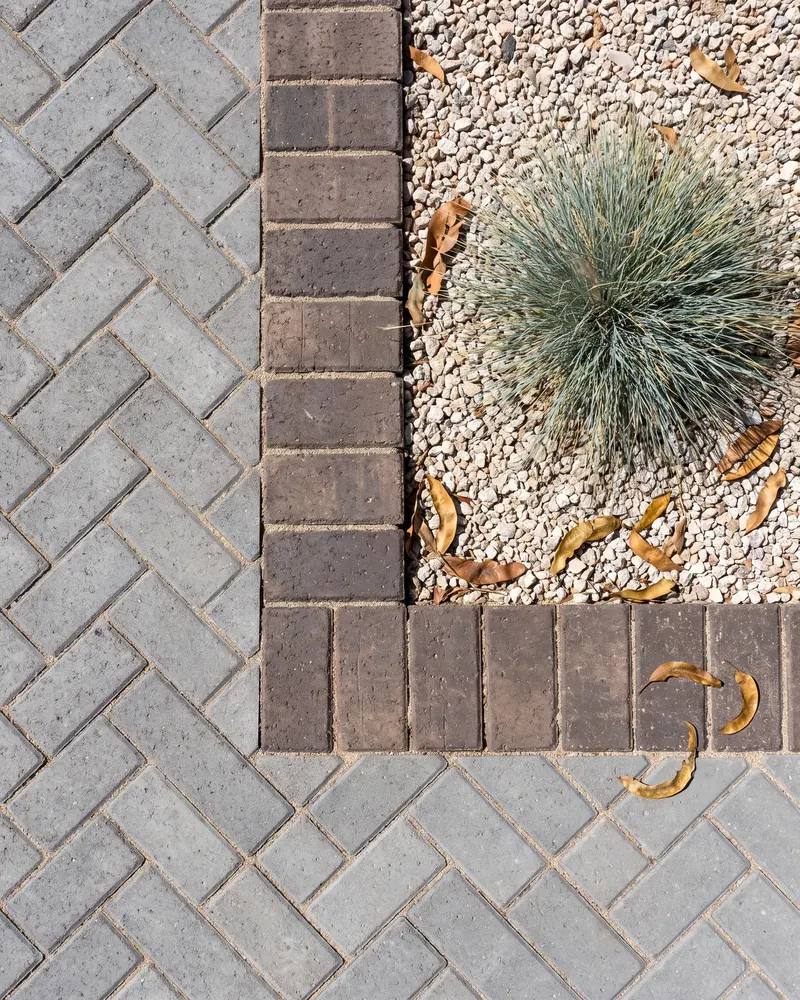
Concrete is formed, placed, finished and cut with control joints early, so it cracks in a clean line at the cut. Pavers go on about an inch of bedding sand inside an edge restraint. Then they get compacted and swept with joint sand.
Build the fire feature
Pits and fireplaces are built from masonry and steel that can't burn. A gas burner is installed to its own manual, including distances to walls and anything overhead. At the walkthrough, ask to see the burner lit and the patio hosed down, so you can watch where the water runs.
What a patio schedule looks like
A typical patio or fire feature job runs about like this. The dates that count are the ones in your proposal.
- Week 1 to 2Site visit, design, material choices and a written proposal. Judge stone and paver samples outdoors.
- Week 2 to 4Material orders, the utility locate, and a gas permit if a fire feature is planned.
- Week 4 to 5Excavation, compacted base, any gas line and sleeves, then forms or edge restraint go in.
- Week 5 to 7Concrete pour or paver and stone setting, fire feature masonry, burner hookup, cleanup and walkthrough.
Rain on open subgrade, a hard freeze near pour day and special-order stone can all push dates.
Concrete, pavers or natural stone
All three make a good patio when the base is right. The differences show up later, in how each one handles cracks, heat, stains and repairs. Which one fits depends on the upkeep you'll put up with and what you want underfoot.
Color matters more here than in most places. Lubbock averages about ten 100-degree days a year, and a dark surface in full sun is hard on bare feet. Lighter tones and textured finishes stay cooler underfoot and hide dust better.
- Poured concreteThe most affordable way to cover a large area, and easy to clean. It will crack somewhere, so joints are cut to control where. Patches show.
- Concrete paversPavers flex with the ground, and single pieces can be lifted and relaid. They take more labor, and joints need fresh sand now and then.
- Natural stoneFlagstone and limestone look at home on the plains. Stone costs the most, thickness varies, and some types flake after wet freezes. Ask for a weathered sample.
- Wood fire vs gas fireWood gives the crackle and the smell, plus smoke, ash and sparks. Gas lights with a valve and throws no embers. In wind, gas is calmer.
What a patio proposal covers, and what it leaves out
A typical scope covers
- Layout, grading and drainage plan
- Excavation and compacted aggregate base
- Concrete, paver or stone surface
- Control joints or edge restraint
- Fire pit or fireplace masonry
- Final cleanup and walkthrough
Planned and priced separately
- Pool construction, plumbing and equipment
- Sprinkler rerouting by an irrigation contractor
- Gas meter upgrades by the utility
- Firewood, furniture and propane tanks
Your proposal names each surface, feature and trade before work starts.
Caliche, cloudbursts and wind around a fire
Lubbock gets 18.33 inches of rain in a normal year, and it likes to arrive all at once.
Soils here are mostly loamy and well drained, with a hard caliche layer roughly 30 to 60 inches down. That layer slows water from soaking deeper. When a storm dumps fast, a flat patio holds it.
Wind changes the fire question. Embers travel far on a gusty evening, which is a strong case for gas and for distance from fences, covers and dry grass. A gas line always needs a permit.
Common questions about patios and Fire Features
Is concrete or pavers better for a Lubbock patio?
Both hold up when the base is built right. Concrete costs less for a big area and is simple to sweep, but it will crack along its joints and is hard to patch invisibly. Pavers move a little with the ground, so they handle freeze and thaw well, and a stained or sunken piece can be swapped. They take more labor.
Does caliche cause problems under a patio?
Not usually, and sometimes it helps. Caliche is a hard, cemented layer that makes a firm bottom when it sits close to the surface. The catch is that water doesn't pass through it well. If the patio has nowhere to drain, water sits on top of that layer. A good slope and runoff plan never gives it the chance.
Should I get a wood or gas fire pit?
Gas is the calmer choice on a windy lot, and wood works if you have the room. On a breezy evening, a wood fire throws smoke and sparks downwind, so it needs open space away from the house, fences and any roof. Gas gives a steady flame you can shut off fast, and can sit closer to seating within the burner's listed clearances. Check burn rules with the fire marshal's office before a wood pit goes in.
Can a fire feature go under my patio cover?
A wood-burning pit, no. Open flame and sparks under a roof are a bad mix. A gas feature sometimes can, but only if the burner's listing allows it. Each listed burner comes with required distances to side walls and to anything above it, and those numbers rule. A masonry fireplace with a proper chimney can be designed into a covered space.
What's the best surface around a pool?
Something light in color, textured for grip, and sloped so splash water drains away from pool and house. Brushed concrete, textured pavers and some natural stone all work. Smooth sealed surfaces turn slick when wet. The joint where the surround meets the pool coping needs planning too, since the two move differently. Call (806) 853-7158 or Book a Consultation to talk it through.
Picture the patio you want.
Call us or book a consultation. We'll look at how water moves across your yard before we talk about stone.