Hardwood and Plank Flooring in Lubbock
Wood moves with the air in your house, so the moisture has to be right before a board goes down.
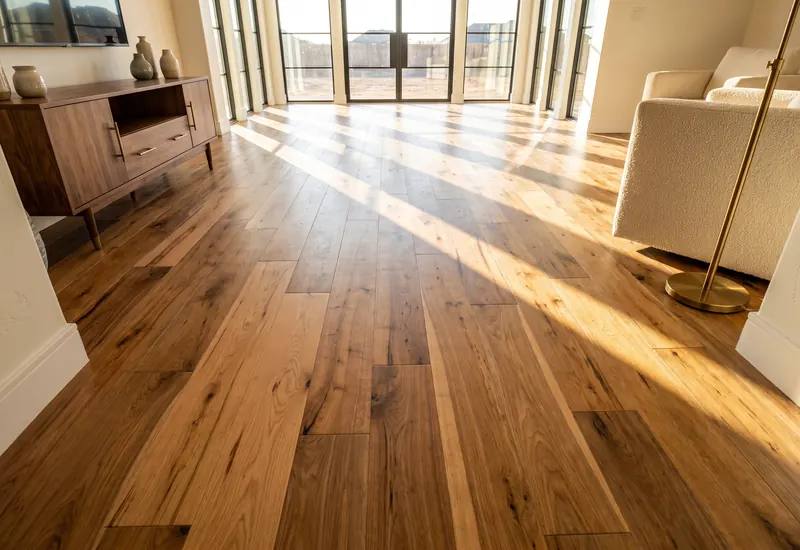
We install solid and engineered hardwood, laminate and luxury vinyl plank, in straight runs, herringbone, and with feature strips or inlays. Flooring is a Giovanni specialty. Wood has to settle to your home before it's fastened, and a moisture meter on the boards and the subfloor is how anyone knows it's ready.
Wood keeps moving after the last board goes down
A wood floor never stops changing size. Boards take on moisture from humid air and swell, then give it up to dry air and shrink. Flooring is commonly made to sit at about 6 to 9 percent moisture, which suits indoor humidity of roughly 30 to 50 percent.
Lubbock air is often drier than that, most of all when the heater runs in winter. A floor installed straight off the truck finds its new balance after it's nailed down, and that's where gaps, cupped edges and cracked boards come from.
So a wood floor job should start with a moisture meter, long before the nailer comes out. The flooring gets a reading, the subfloor or slab gets a reading, and nothing is fastened until the numbers agree. It adds days up front, and it spares you a floor that opens up by February.
How to tell a floor is ready to be replaced
Floors wear slowly, so these are easy to stop noticing.
Finish worn to bare wood
Gray, dull paths where the finish is gone let spills and grit reach raw wood. Solid hardwood can often be sanded and refinished. Thin veneers and laminate can't, so they get replaced.
Gaps that stay open all year
Small gaps that open in winter and close in summer are normal. Gaps wide enough to catch a coin, in every season, mean the boards shrank for good and won't recover.
Edges higher than the middle
Boards that cup, with raised edges, are reacting to a moisture difference between their top and bottom faces. The cause has to be found and fixed before anything gets sanded flat.
Carpet over a concrete slab
Old carpet holds dust, and Lubbock supplies plenty. Hard flooring is easier to keep clean, but the slab needs a moisture test before any wood or plank goes down over it.
Planks that click or lift
Floating floors that pop, separate at the ends, or lift at doorways were usually laid over an uneven subfloor, or pinned tight to the walls with no room to expand.
Three floors meeting in a hall
Tile, carpet and wood colliding at odd heights chop a house into small pieces. One continuous floor, or a planned transition, lets the rooms read as a single, connected home.
How a floor gets from the truck to your living room
Most of what makes a floor last happens before a single board is fastened.
Consultation and floor choice
We look at your rooms, the floors you have now and how you live. Kids, dogs, a west-facing wall of glass, all of it matters. Then we recommend a product and a pattern, and your proposal names the prep, the layout direction and every transition.
Delivery and first readings
Flooring should come into the house only when the heating and cooling are running at normal settings. The first readings happen on arrival: the room's humidity and temperature, plus the moisture content of the boards and of the subfloor. Those numbers are the starting line, so ask to see them.
Acclimation by meter
The boards rest until they reach the moisture level they'll live at. A common rule of thumb is a wood subfloor within 4 percentage points of strip flooring and within 2 of wide plank. The readings set the start date, whatever the calendar says.
Subfloor and slab prep
Concrete slabs are tested for moisture and treated as the flooring or adhesive maker requires. High spots are ground down and low spots filled. Plank floors typically want the subfloor flat within 3/16 inch over 10 feet. Skipping this is why planks click and lift.
Layout, install, and finish
A good layout runs square to the room, not to a crooked wall, so chalk lines come before the first row. Solid wood is nailed to a wood subfloor, and engineered is glued or floated over slab. Every floor keeps an expansion gap at the walls, hidden by the base.
Days to acclimate, then days to install
Wood runs on moisture readings, so treat these as typical trade ranges and go by the dates in your proposal.
- Day 1Delivery, then first readings of room humidity, subfloor moisture and the boards themselves, all written down.
- Next 2 to 10 daysAcclimation. Engineered wood commonly needs 2 to 3 days and solid 3 to 10, with the meter making the final call.
- Install, 1 to 3 daysSubfloor prep, layout lines and installation. Herringbone and inlays take longer than straight runs do.
- Finish and trimSanding and finish coats for site-finished floors, then base, transitions and a walkthrough with care instructions.
A damp slab, a subfloor that needs heavy leveling, and patterned layouts are the usual reasons a floor takes longer.
Solid, engineered, laminate or vinyl plank, and what each one gives up
No floor is best everywhere. Solid hardwood can be refinished for generations, but it moves the most with humidity and shouldn't be glued straight to a slab. Engineered hardwood has a real wood face over a stable layered core, which makes it the usual pick over concrete.
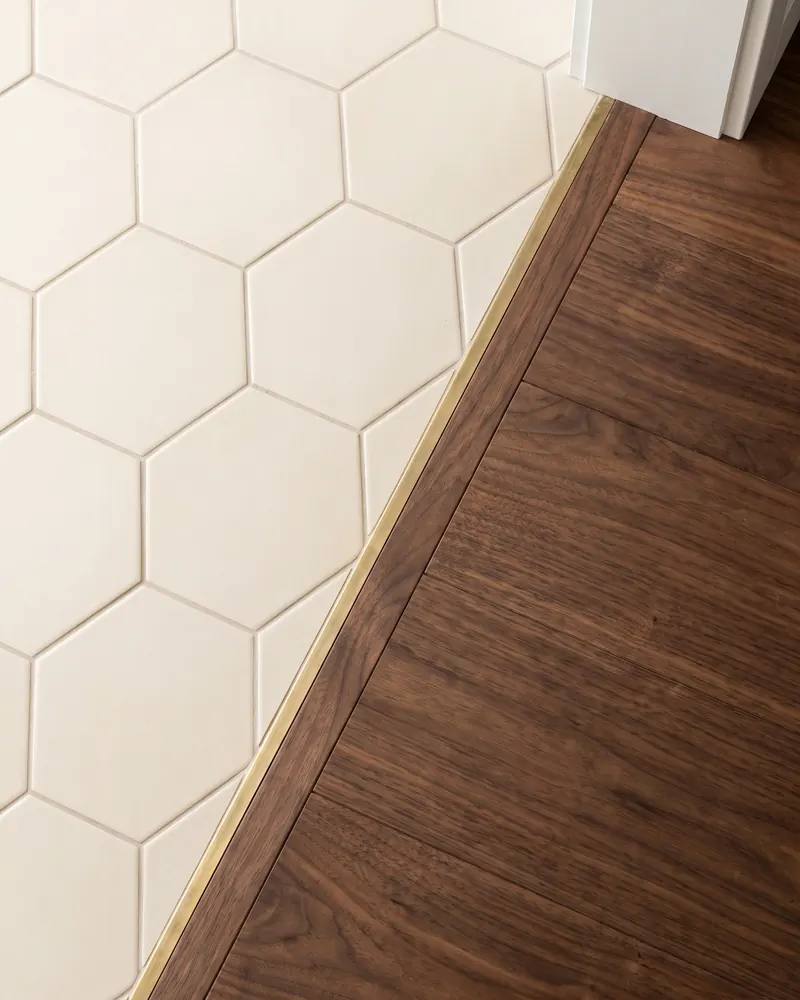
Laminate and luxury vinyl plank cost less and handle daily wear well, but neither can be refinished. Pattern is a separate choice. We've laid hickory hardwood and built an entry where hex tile meets walnut flooring at an inlaid transition. The more intricate the pattern, the more cuts, time and material it takes.
- Solid hardwoodIt can be sanded and refinished many times, so it can outlast the house. It moves the most with humidity and needs a wood subfloor to nail into.
- Engineered hardwoodReal wood on top, layered core below. It stays flatter over a slab and in dry air. The wear layer is thinner, so refinishing is limited.
- Laminate and vinyl plankBoth resist scratches and cost less. Laminate swells if water sits on a seam. Vinyl handles spills but can fade or shift in strong direct sun.
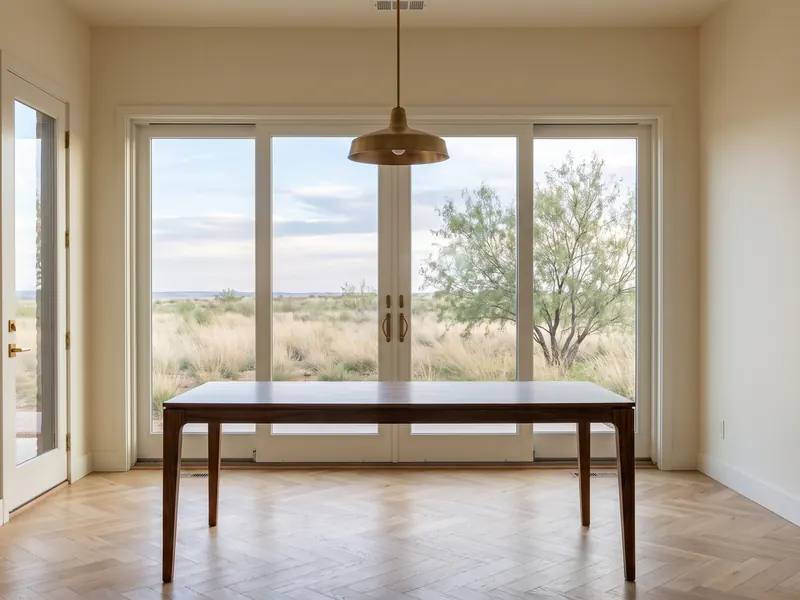
- HerringboneA pattern that makes a plain room feel carefully built. It needs a dead-square layout and wastes more on cuts, so plan for more labor and more boards.
What a well-run flooring job covers
A typical scope covers
- Moisture readings, written down
- Removal of old flooring
- Subfloor leveling and prep
- Installation in your chosen pattern
- Transitions, base and shoe molding
- Care and humidity guidance
Planned and priced separately
- Moving pianos, safes or pool tables
- Structural or foundation repair
- Whole-house humidifier installation
- Asbestos testing on old vinyl or adhesive
Furniture and closets get handled differently on every job. Your proposal says who moves what and which rooms are in.
Why Lubbock is hard on wood floors
Lubbock gets about 18 inches of rain a year, and a wood floor feels every dry day.
Lubbock averages 18.33 inches of precipitation a year and sits in a dry climate zone. Indoor humidity can fall below 30 percent in winter. At 25 percent humidity, wood settles near 5 percent moisture, drier than most flooring is made. A humidifier during heating season helps hold a floor steady.
Many homes here sit on a concrete slab, so engineered wood and plank are common choices. A slab needs testing no matter the weather, because the limit comes from the product. Strong sun through south and west glass fades wood over time. Our guide to hardwood floors in a dry climate goes deeper.
Common questions about hardwood and Plank Flooring
How long does hardwood need to acclimate in Lubbock?
There's no fixed number of days. Solid hardwood commonly takes 3 to 10 days and engineered 2 to 3, but a moisture meter makes the call. The boards need to match the conditions they'll live in, and the subfloor needs to be close to the boards. In a dry climate this step matters more, because flooring often arrives wetter than your house.
Can solid hardwood go on a concrete slab?
Not directly, as a rule. Solid boards are meant to be nailed down, and they move too much to glue to concrete with confidence. Engineered hardwood is the usual answer over a slab. It can be glued or floated, and its layered core stays flatter. Either way the slab needs a moisture test first, and a moisture barrier goes down when the product calls for one.
Will my wood floor gap in winter?
A little, probably. Wood shrinks when the heater dries the air, and hairline gaps between boards in January are normal. They close again when humidity returns. What you want to avoid are wide gaps that never close. Proper acclimation prevents most of that. Keeping indoor humidity around 30 to 50 percent, with a humidifier if you need one, handles the rest.
Is vinyl plank better than hardwood with kids and dogs?
It's more forgiving day to day. Vinyl plank resists spills, wet paws and scratches, and it costs less. Hardwood dents and scratches, but it can be sanded and refinished, and vinyl can't, so when vinyl wears out you replace it. Some families put plank in kitchens, baths and mudrooms and real wood in the living spaces, which uses the strengths of both.
Does herringbone cost more than a straight layout?
Yes, in labor and in material. Every board is cut to an exact length, the layout has to start dead square, and angled cuts at the walls create more waste. It also takes longer to install. What you get is a floor that looks made for the room. A middle path is a straight floor with a feature strip, or herringbone in the entry only.
Want to talk floors?
Call us or book a consultation. Bring your questions about species, pattern, and wear, and we'll go through them one by one.