Bathroom Remodeling in Lubbock, Built to Stay Dry
Tile is the part you see. The part that keeps a shower dry sits underneath it.
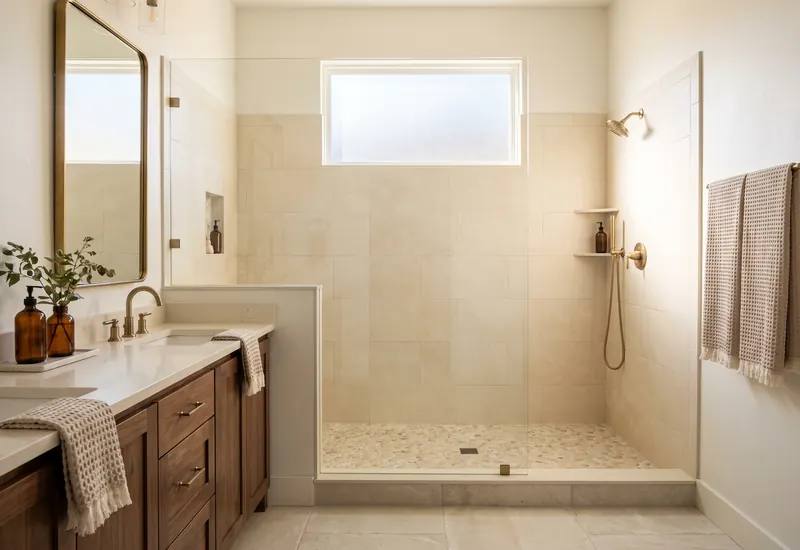
Bathroom remodeling covers showers, tubs, tile, vanities, ventilation and the waterproofing behind it all. Giovanni Home Services designs and builds the room. You get a detailed proposal and make your selections before the build starts. A shower has to be waterproofed and water tested before any tile goes on, so ask to see that step. At the end we go through the finished room with you.
Tile and grout don't keep the water out
Water passes through grout lines every time you shower. What keeps the framing dry is a membrane behind or under the tile, tied into the drain. If that layer is wrong, the prettiest tile in town can't save it.
So a bathroom gets built from the inside out. The shower floor slopes to the drain, commonly a quarter inch per foot, and the membrane wraps every corner and seam. Then the pan is plugged, filled and left to sit before it gets covered.
The rest of the room counts too: a vanity at the right height, a fan that moves the steam out, and storage where your hand already reaches. Bathrooms are small, so each inch and each choice carries more weight than anywhere else in the house.
Cracked grout, soft floors and other signs to take seriously
Some of these are cosmetic, and others are water showing you where it's been going.
Grout that keeps cracking
Grout that cracks again in the same corner after every repair points to movement or moisture hiding behind the wall. More caulk only covers the symptom for a season at most.
Soft floor near the tub
A floor that gives underfoot beside the tub or toilet usually means the subfloor has been wet for a while. That area has to be opened up and dried out, not tiled over.
A mirror that stays fogged
If the mirror is still fogged ten minutes after a shower, the fan is undersized, clogged, or venting nowhere useful. Steam that lingers ends up in the paint, trim and drywall.
White crust on everything
Lubbock water leaves mineral scale on glass, fixtures and dark tile. If you scrub every week and still lose, different surfaces and finishes will make the room easier to keep.
A tub nobody uses
Stepping over a tub wall for every shower gets old, and it gets harder with age. Converting to a walk-in shower with a low curb is a common change.
A musty smell with no source
A damp smell that comes back after every cleaning often starts behind the tile or under the pan. You can't see that leak, but your nose is rarely wrong about it.
How a bathroom gets built, one layer at a time
Each layer has to be right before the next one covers it, because you can't go back and check.
Proposal, selections, and permits
After the consultation you get your proposal, and you pick tile, fixtures, the vanity and glass. If plumbing or wiring is moving, the permits have to be in hand first, because Lubbock requires them before that work begins. Custom glass and special-order tile take the longest to arrive, so settle those early.
Demolition and a hard look
The old room comes out, down to the studs where needed. This is when hidden damage shows up: wet framing, a rotted subfloor, old patches from past leaks. You see what turned up, and the fix is agreed before anything moves ahead.
Rough plumbing, wiring, and fan
Supply lines, the drain, the shower valve and wiring go in while the walls are open, along with the exhaust fan and its duct. The city inspects rough trade work before it can be covered up, so nothing is closed in until that passes.
Slope, waterproofing, and flood test
Backer board goes on, and the shower floor is sloped, then sealed with a pan liner, sheet membrane or liquid membrane, using a drain made for that system. After it cures, the pan is plugged and filled, typically for 24 hours, to prove it holds.
Tile, fixtures, and final check
Tile in a wet area needs full mortar contact, and the figure installers commonly work to is 95 percent coverage. Corners get flexible sealant instead of grout. Then the vanity, top, fixtures and glass go in, and you inspect all of it with us.
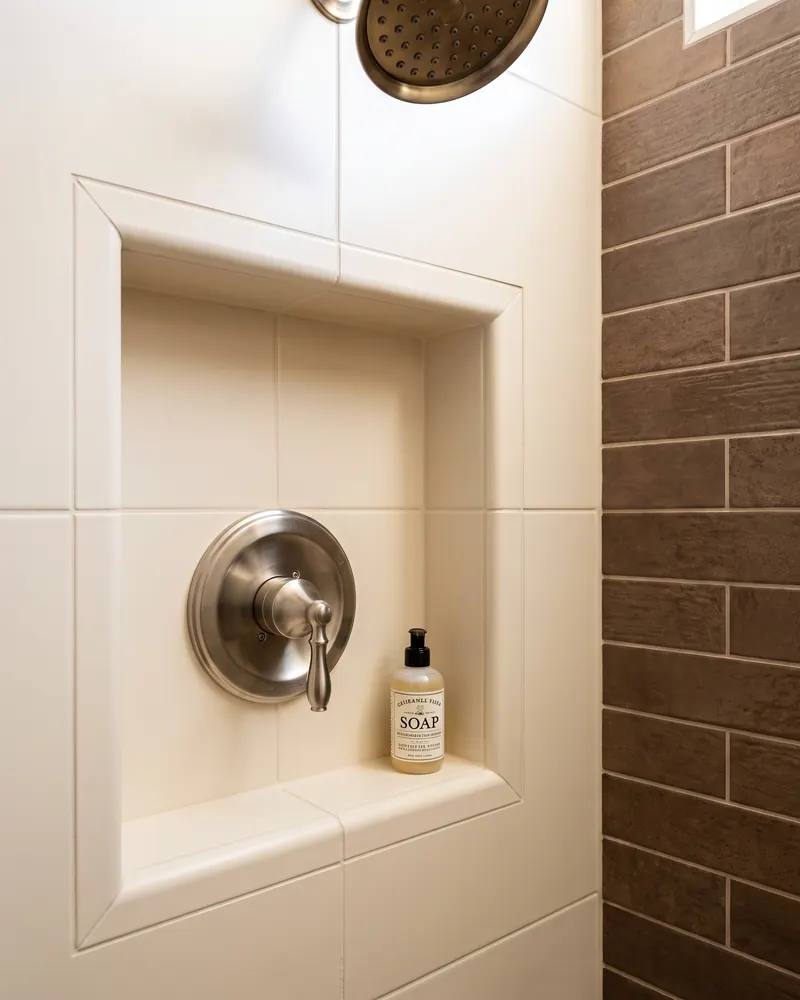
A bathroom takes weeks on site and months overall
A straightforward full gut typically takes 3 to 6 weeks on site. That's normal for the trade, and the schedule in your proposal is the one to plan by.
- Before the buildDesign, fixture selections and ordering. With lead times and permits, the whole span is often 2 to 4 months.
- First weekDemolition, a close look at framing and subfloor, then rough plumbing, electrical and the fan.
- Middle weeksBacker board, shower slope, waterproofing, cure time and the flood test, then tile, grout and sealant.
- Final weekVanity, top, fixtures and shower glass, followed by paint, accessories and the final walkthrough with you.
Water damage found at demolition and custom shower glass, which gets measured after tile, are the usual reasons a bath runs long.
Surfaces that forgive hard water, and ones that don't
Let the water steer your picks. Mineral spots show most on clear glass, polished chrome, matte black fixtures and dark glossy tile. They show least on brushed metal and on lighter tile with some pattern in it. Neither choice is wrong, but one means more wiping.
Then think about joints. Every grout line is a place for scale and soap to settle, so larger tile means fewer lines to scrub. Small mosaic on a shower floor gives your feet grip and follows the slope, so big walls over a small-format floor is a common pairing.
- Porcelain tileDense, hard, and nearly waterproof on its own face. It's the low-upkeep choice for shower walls and floors, but it's tough to cut cleanly, so layout matters.
- Marble and travertineStone looks like nothing else. It's also porous and reacts to acids, so it needs sealing and gentle cleaners. Hard water marks it faster than porcelain.
- Cement or epoxy groutCement grout costs less and repairs easily, but it can stain. Epoxy grout resists stains and never needs sealing, but it's harder to install and hazes if rushed.
- Sheet or liquid membraneSheet membranes give an even, known thickness. Liquid membranes handle niches and odd shapes well but must go on thick enough. Either works when every part matches.
What a bathroom job covers, and who handles the rest
A typical scope covers
- Demolition and haul-off
- Shower pan, slope and waterproofing
- Wall and floor tile, grouted
- Vanity and top installation
- Trim, paint and accessories
- Protection for floors and hallways
Planned and priced separately
- Plumbing rough-in, done by a plumber under permit
- New wiring, pulled by an electrical contractor
- Water softener or whole-house filtration
- Mold or asbestos testing and removal
Scope changes from one bath to the next, so your proposal lists what's in and what's out.
Hard water, dry air, and Lubbock's bath fan rule
Lubbock water averages 169 parts per million hardness, and clear shower glass shows every bit of it.
That number comes from the city's 2025 water quality report, where readings ranged from 81 to 244. Total dissolved solids averaged 633 parts per million. In a bathroom that means any water left to dry on a surface leaves minerals behind, so choose finishes that hide them and squeegee the glass.
Lubbock builds under the 2021 residential code, which calls for a bath fan or an openable window. A local amendment lets the fan duct end in a ventilated attic, at least 10 inches above the insulation, or at a soffit, gable or eave vent. See our Lubbock permit guide for what needs a permit.
Common questions about bathroom Remodeling
Is tile waterproof on its own?
No. Porcelain sheds water on its face, but grout is porous and water gets through the joints every day. The waterproofing is a separate layer under or behind the tile: a pan liner, a sheet membrane, or a liquid membrane, connected to the drain. That layer protects the framing. Sealing grout helps with stains, but it doesn't make a shower waterproof.
What is a shower flood test?
It's a leak check on the shower pan before tile covers it. The drain is plugged, the pan is filled, the water level is marked, and it sits, typically for 24 hours. A drop in the level means a leak. A quick spray from a hose doesn't prove the same thing. Any site-built shower pan deserves this test, because fixing a leak later means tearing out finished tile.
Do I need a permit for a bathroom remodel in Lubbock?
For new tile, a vanity, paint or a new top, no. Lubbock exempts finish work. You do need permits when plumbing is relocated, when new wiring or circuits are added, or when walls are altered. Replacing a faucet or a light fixture counts as a minor repair. If the drain is moving, plan on a plumbing permit and an inspection before the floor is closed.
How do I keep hard water spots off new tile and glass?
Pick surfaces that hide the spots, then keep them dry. Brushed fixtures, lighter tile and fewer grout lines hide mineral spots, while clear glass and dark glossy surfaces show them. After that it's habit: squeegee the glass and wipe fixtures dry after use. A water softener cuts scale across the whole house, and that's a separate decision from the remodel. Keep acidic cleaners away from marble and other natural stone.
Can I use the bathroom while it's being remodeled?
Not once demolition starts. Fixtures come out early, and the shower stays off limits until tile, grout and sealant have cured. If it's your only bathroom, say so at the consultation. Work can sometimes be staged so the toilet is out of service for the shortest stretch possible. A second bathroom in the house makes the whole project far easier to live through.
- Tile InstallationSubstrate prep, layout and movement joints for floors, walls and showers.
- Custom Cabinetry and Built-InsVanities and linen storage made to fit the room.
- Kitchen RemodelingThe other room where plumbing, tile and cabinets meet.
- Remodeling Permits in LubbockWhich bathroom changes need a permit and which don't.
Thinking about your bathroom?
Book a consultation and show us the room. We'll tell you what we see, then put the whole scope in writing.