Landscape and Garden Design in Lubbock, TX
Low-water landscapes and gardens, planned as one system with your home.
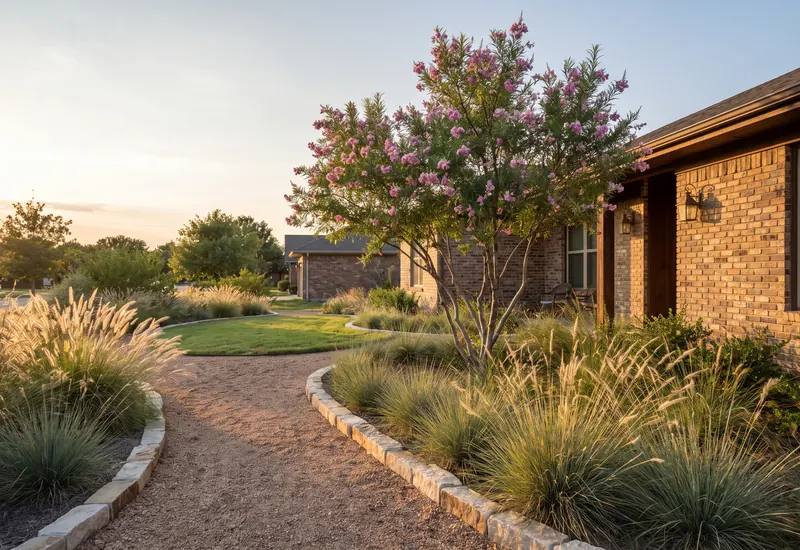
Landscape and garden design is the planning and planting of your yard. Giovanni Home Services designs and installs landscapes, gardens and permaculture plantings in Lubbock. A good plan starts with how water and wind cross your lot, then leans on native and adapted plants for a dry 7b climate.
Plan the whole yard before you buy a plant
Most landscapes get bought one plant at a time, a tree here and a row of shrubs there. Ten years on, half has died and the rest needs water every other day. The plants were usually fine. Nobody had drawn a plan.
A plan works the other way around and starts with watching. Where does the roof shed its water? Which corner bakes in August? Where does the wind come through in spring? Those answers decide where beds, trees, paths and sitting areas belong.
Permaculture and regenerative design grow out of that kind of watching. You set things up so the land does more work each year, with soil that gets richer and rain that stays where it falls. The house, the patio and the garden get planned as one piece.
Signs your yard needs a plan first
Most yards that need a plan show at least one of these.
The lawn browns on two watering days
The city limits irrigation to two assigned days a week. If the grass browns out anyway, the yard has more thirsty turf than that schedule can carry. More water isn't an option, so the layout has to change.
Rain runs straight to the street
Next time it storms, watch where the water goes. If it sheets off the roof and down the driveway, you're sending away the best water your plants will ever get.
Plants die in the same spots
Repeat losses usually mean the wrong plant for that exposure or that soil. Our subsoil is alkaline and full of lime. Plants that want acid, damp ground never settle in.
There's no shade or shelter
A flat lot with no trees and no windbreak is hard to sit in from March through September. Shade and shelter can be grown, but only when someone plans for them.
Construction left bare ground
New patios, pools and additions leave hard, compacted bare dirt behind. That's also the best moment to shape the soil, set the drainage and plant around the new space.
You want to grow food
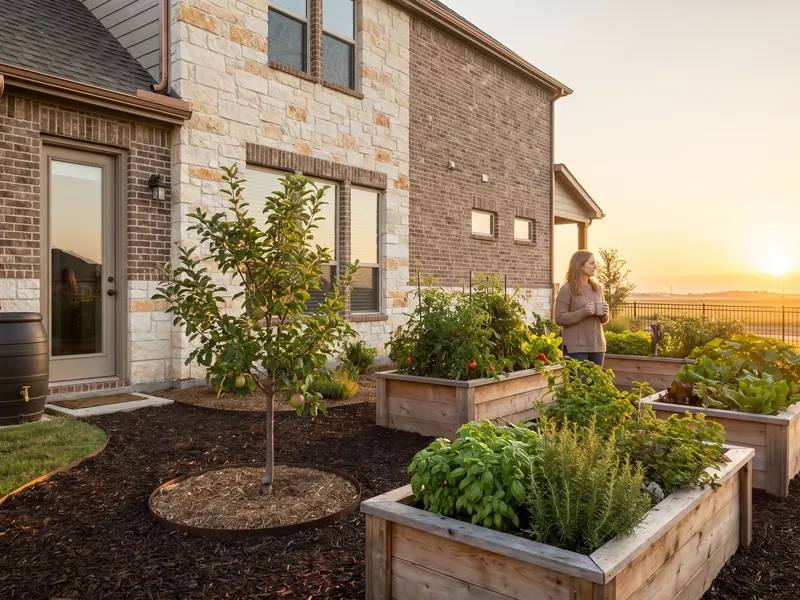
It might be herbs by the kitchen door, fruit trees, raised beds, maybe chickens someday. A food garden works best when it sits where you already walk past it every day.
Design first, then water, soil and plants
Nothing gets dug until there's a plan. After that, these five steps follow one another.
Observe and map
The first visit is for walking the lot and mapping sun, shade, the prevailing south wind, slopes, soil and views. The map shows where water collects after a storm and where it leaves. Permaculture designers call this a sector analysis. It keeps everyone from guessing.
Zone by use
Next the plan arranges the yard by how often you visit each part. Herbs and daily beds go near the door. Fruit trees and perennials sit farther out. Tough, low-care plantings take the far corners. Paths follow routes you already walk.
Plan water first
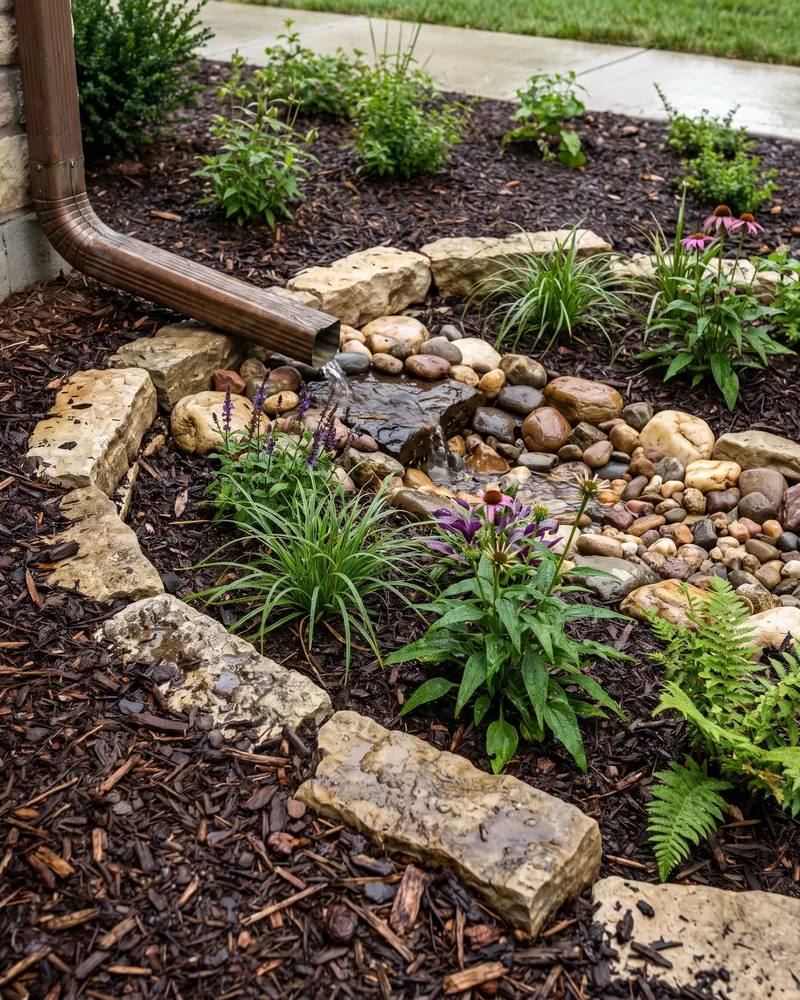
Water gets planned before any plant is picked. Roof runoff can feed rain barrels or a cistern, with overflow sent to a rain garden or a swale on contour. Every basin gets a spillway, and a common rule of thumb is that it drains within 24 to 48 hours.
Build soil and shape beds
Then comes the ground work. Compacted soil gets loosened, compost goes in, and beds, berms and basins take the shape the plan calls for. Rock goes in at each spillway. Hard elements like paths, edging and gates are set before any plants arrive.
Plant, mulch and hand over
Plants go in grouped by water need, so thirsty and tough ones never share a line. Mulch goes down about 3 inches deep to hold moisture and block weeds. The walkthrough is the time to go over your watering days and first-year care.
How a landscape project usually unfolds
Design and install work usually falls in these ranges. Your proposal sets the schedule, and planting follows the season.
- Week 1 to 3Consultation, site mapping and concept design. Seeing the yard after a good rain helps a lot.
- Week 3 to 5Final plan, plant list, proposal and scheduling. Trees, plants and stone get sourced and reserved.
- Week 5 to 7Grading, basins and swales, rain storage, soil work with compost, then paths, edging and gates.
- Week 7 to 8Planting, mulch, cleanup and the final walkthrough, with a care plan for the first year.
Season matters most. The average last spring freeze is about April 9 to 10, the first fall freeze about October 31.
Plants and materials for the South Plains
The backbone is plants that like it here. Desert willow is rated very drought tolerant and hardy in our zone. Blue grama and buffalograss are the native shortgrasses of these soils. Live oak and fragrant sumac add structure and shade.
The rest is simple and mostly natural. Compost feeds the soil and wood mulch covers it. Stone goes at edges and spillways, gravel on the paths, and barrels or a cistern store the rain. None of it is fancy, and all of it is chosen to last outdoors.
- Native grass vs turf lawnBuffalograss and blue grama need far less water and mowing than a traditional lawn. They go tan in winter and look shaggy. Keep turf where you play.
- Rain barrels vs a cisternBarrels are cheap and quick to set, but fill in one good storm. A cistern stores enough for a dry month and needs space and a pad.
- Swales and rain gardensThey soak roof and patio runoff into the root zone. Built off contour or without an overflow, they erode or stay boggy. Layout must be precise.
- Drip irrigationDrip puts water at the roots with little lost to wind and sun. Lines can clog, and Texas requires a TCEQ irrigator license to install one.
What a landscape proposal includes
A typical scope covers
- Site mapping and a drawn plan
- Grading, berms, basins and swales
- Soil preparation with compost
- Native and adapted trees and plants
- Mulch, stone edging and paths
- First-year watering and care guide
Planned and priced separately
- Sprinkler systems, by a TCEQ irrigator
- Weekly mowing and ongoing maintenance
- Large tree removal and stump grinding
- Pool, septic or well work
The written proposal shows exactly what happens now and what can wait.
Gardening on 18.33 inches of rain in Lubbock
The cheapest water you'll ever get is the rain that lands on your roof.
Lubbock averages 18.33 inches of precipitation a year. The city limits irrigation to two assigned days a week, never Sunday. From April 1 to September 30, sprinklers may only run before 10 a.m. or after 6 p.m.
Soils are loamy and well drained, with caliche roughly 30 to 60 inches down and alkaline subsoil. We're in USDA zone 7b, so plants rated only for zones 8 and 9 may not survive winter.
Common questions about landscape and Garden Design
What is permaculture, and does it work on a city lot?
It's a way of designing land so the pieces help each other, and yes, it works on a regular city lot. Rain from the roof waters the trees, and the trees shade the house and drop leaves that feed the soil. Beds you visit daily sit close to the door, so nothing gets wasted. You don't need acreage to use any of these ideas.
Which days can I water in Lubbock?
It goes by the last digit of your street address. Addresses ending in 0, 3, 4 or 9 water Monday and Thursday. Those ending in 1, 5 or 6 water Tuesday and Friday. Those ending in 2, 7 or 8 water Wednesday and Saturday. Nobody irrigates on Sunday. Hand watering is allowed any time, which is a big help for new plants.
What plants do well here with little water?
Look to plants from this region or ones like it. Desert willow, blue grama, buffalograss, fragrant sumac and prairie acacia are good in full sun. The City of Lubbock points residents to the Texas SmartScape plant database, which tags plants as native or adapted. Desert willow handles drought well but suffers when overwatered. Keep tough and thirsty plants on separate lines.
Can rainwater harvesting work with so little rain?
Yes, because roofs are big and our rain comes in bursts. A short, hard storm sends a lot of water off a roof in minutes, and most of it heads for the street. Barrels, a cistern, or shaping the ground to steer runoff into planted basins keeps that water on your lot. As a rule of thumb, a basin should empty within a day or two.
When is the best time to plant?
Fall and spring. Fall planting gives roots a cool season before their first summer. Spring works once freeze risk has passed, and the local extension planting calendar uses April 15 as its marker. On a July project, beds and paths can go in first and the planting can wait until it cools. Call (806) 853-7158 or Book a Consultation to start your plan.
Want a yard that fits this climate?
Call us or book a consultation. We'll walk your property with you and talk about water, wind, shade, and what you want to grow.